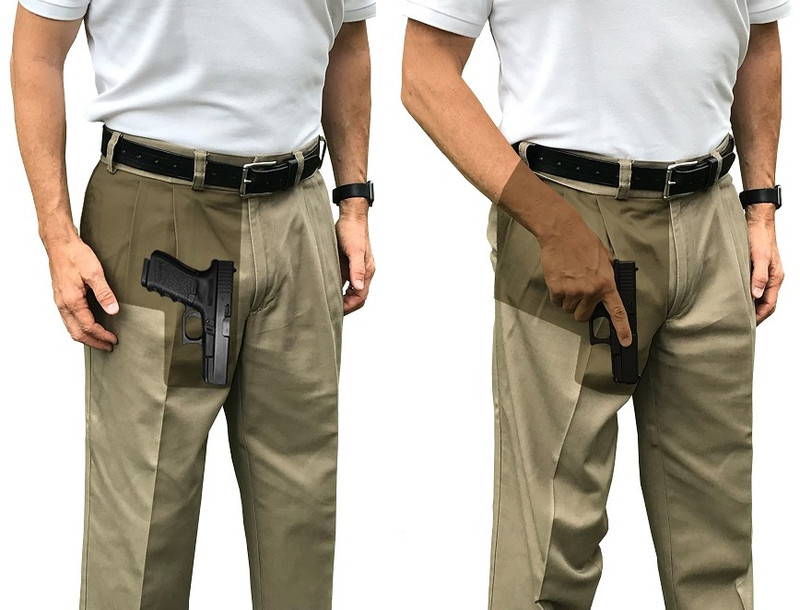
The answer is YES . . . either gun safeties or pocket holsters should always be employed to prevent accidental discharges.
Let’s start with a inside peek at CCW Breakaways' concealed carry system to help you understand how and why it works so well.
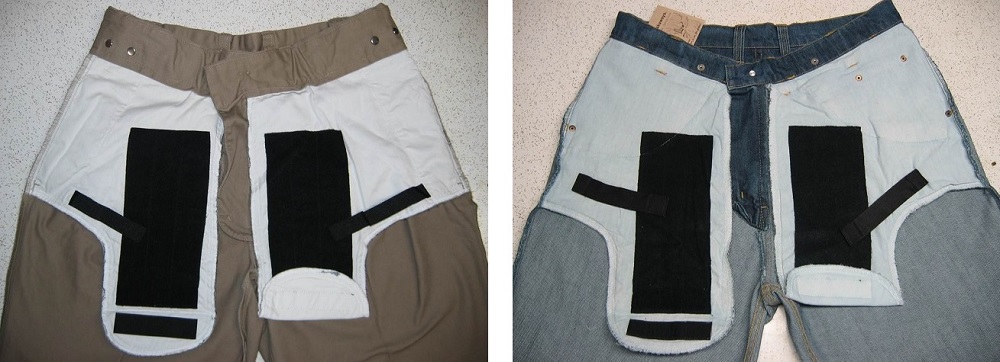
With X-RAY Vision in the image above, you can see where the gun is concealed and carried in the sewn-in holster-pockets. The patented holster-shaped pockets securely holds the firearm in comfortable location on the body . . . which is below the hip-line-of-flexure . . . but the holster-pockets do not take the place of the firearm’s safety. CCW Breakaways will always encourage every firearm owner to implement one of the following safe CCW methodologies:
- The CCW practitioner can carry an EDC gun that has a built-in mechanical thumb-activated safety. When drawing the weapon, exercising trigger finger discipline and thumb-safety discipline is a must until the muzzle is pointed in a safe direction (meaning, until the target has been acquired, or on-the-way to target acquisition). This is a developed skill and it requires repetitive practice. This same discipline is applicable to all holstering methodologies: IWB’s, OWB’s, Shoulder-Holsters, Shirt-Holsters, Ankle-Holsters, Belly-Bands, etc.
Here are several firearms (this is not an exhaustive list) with built-in safeties as examples:
https://www.smith-wesson.com/firearms/mp-9-shield-m20-manual-thumb-safety
https://www.sigsauer.com/products/firearms/pistols/p365/
https://ruger.com/products/lc9s/models.html
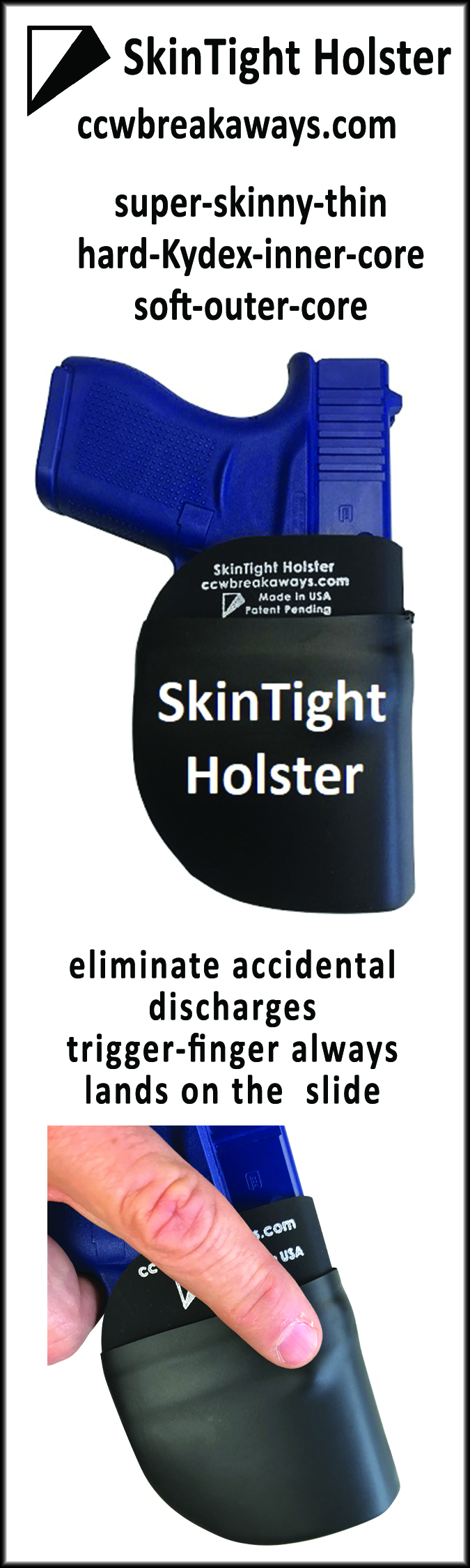
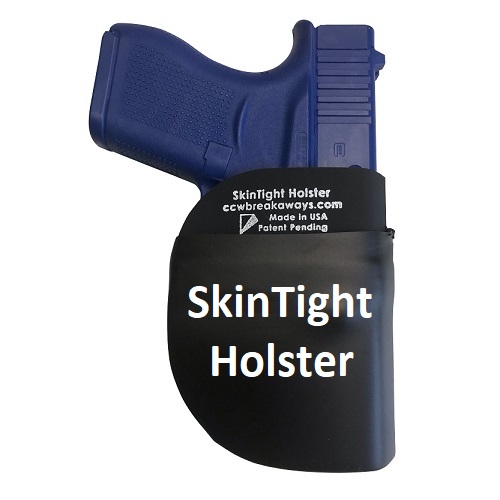
- If the CCW practitioner’s firearm does not have a built-in mechanical safety, then a rigid (NOT a Soft) pocket holster should be employed to cover the trigger guard area in case the practitioner does not exercise good trigger-finger-discipline during a heightened adrenaline induced moment.
An example is our own branded SkinTight Holster . . . watch this video to understand why we encourage hard cores only:
https://ccwbreakaways.com/how-to-use-the-skintight-holster/
- If the CCW practitioner’s firearm does not have a built-in mechanical safety, then another alternative is to purchase an aftermarket Safety Device such as the trigger blocker which was designed for Glock firearms.
An example would be the SAF-T-BLOK which has a training video and can be purchased here:
https://ccwbreakaways.com/saf-t-blok/
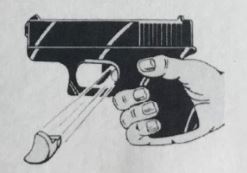
- And finally, if the CCW practitioner’s firearm does not have a built-in mechanical safety, then another alternative is to carry the EDC without a round in the chamber. This is a last resort recommendation.
We always encourage users to obey the four rules of firearm safety. If you’re not familiar with them, we’ve published some basic instruction here:
https://ccwbreakaways.com/blog/the-four-rules-of-gun-safety/
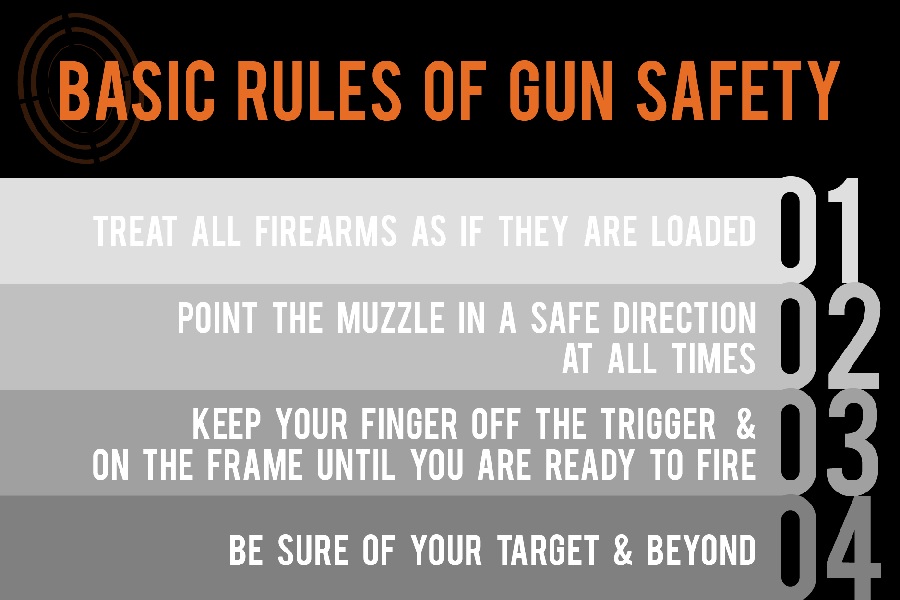
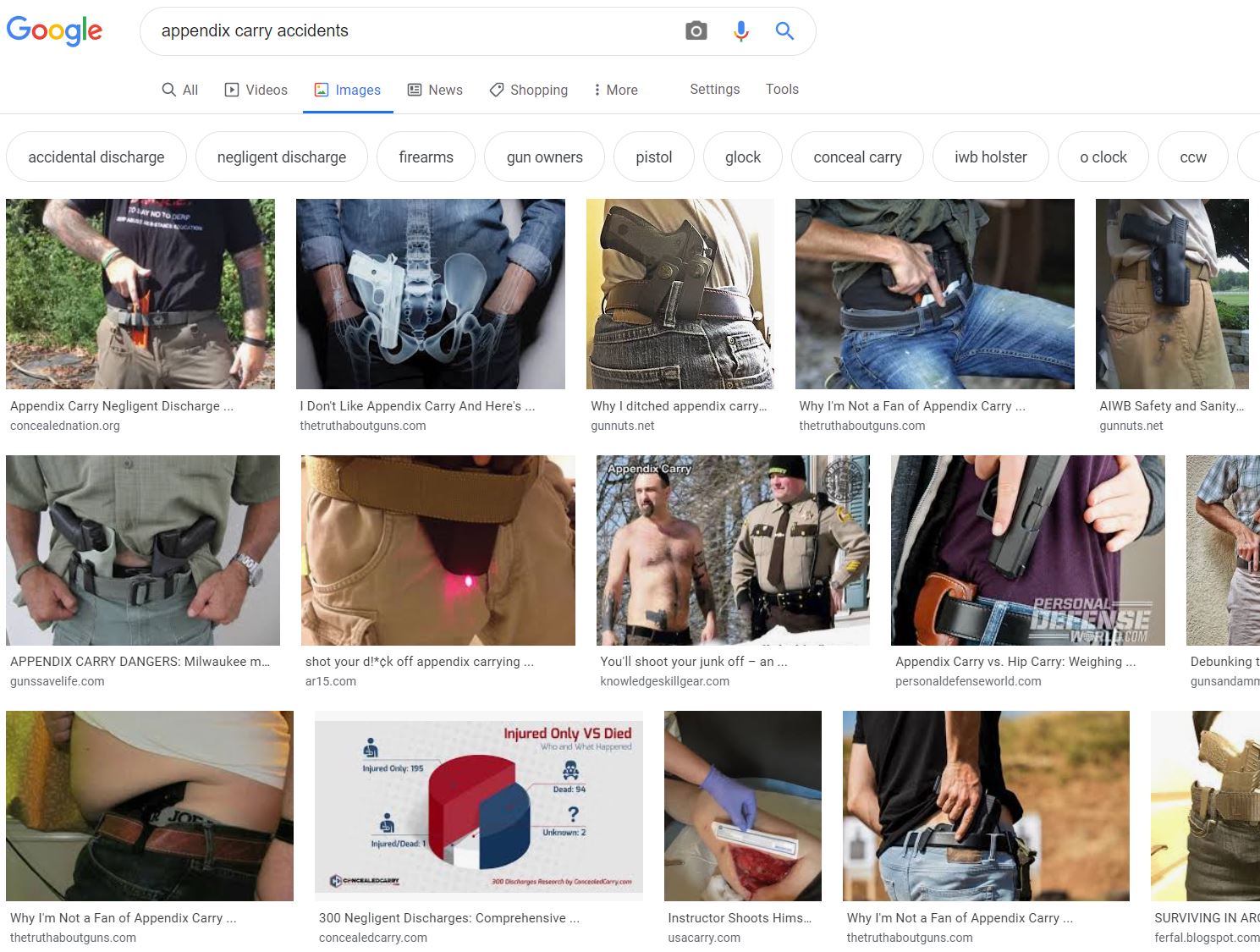
Muzzling is an issue in every concealed carry method. And because of that, we encourage every CCW practitioner to adopt one of our four methods described above. We do not encourage appendix-carry-IWB, five-o’clock-IWB, or belly-band-carry . . . because the CCW practitioner’s femoral artery is vulnerable . . . unless one of our four rules above are implemented. Please Google appendix carry accidents you’ll find an abundance of images and videos illustrating the problem (snippet below). And muzzling can be a safety issue when re-holstering a firearm. This article illustrates the problem and the solution very well:
https://ccwbreakaways.com/blog/preventing-accidental-discharges-by-looking-into-the-holster/
And finally, Trigger Finger Discipline needs to be addressed. When a gun is drawn from any concealed carry storage location, it almost always drawn from the blind. We have a trigger finger registration point on our SkinTight Holster that is a patent pending feature. We want to ensure that your finger ALWAYS ends up on the slide . . . not in the trigger guard area. The linked image below shows the How To Use the SkinTight video.